2026 Top USB Interface Trends and Innovations for Gadgets and Devices
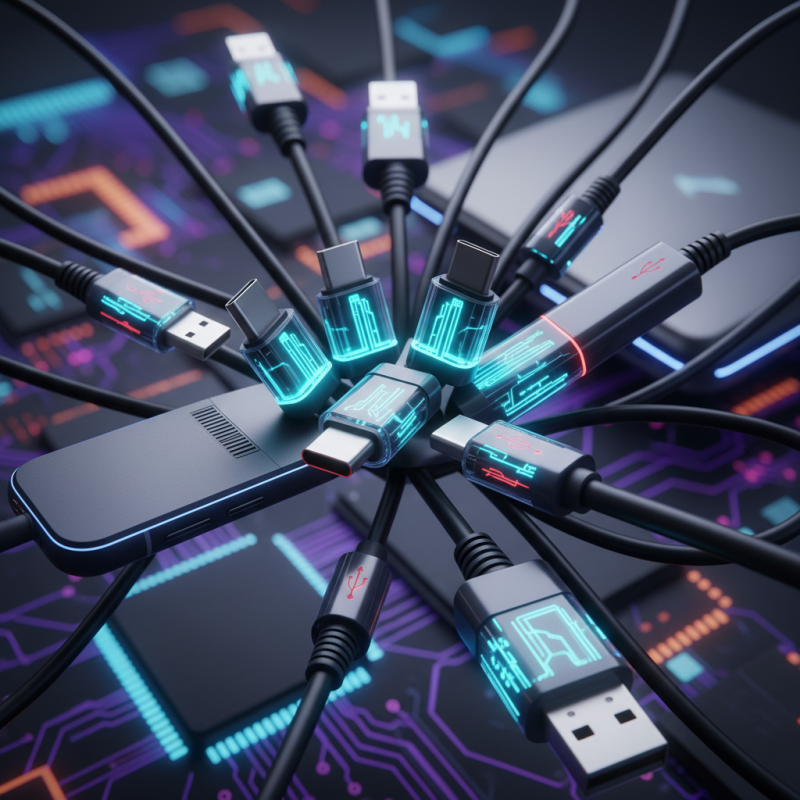
The landscape of USB interfaces is rapidly evolving. As we approach 2026, innovations in this technology will shape how we connect devices. The USB interface has become a backbone for many gadgets, facilitating faster data transfer and charging capabilities.
New designs and improved standards promise greater efficiency and compatibility. Devices will soon support even more versatile USB connections. Think about how your smartphone, laptop, and gaming consoles interact with each other today. This integration will continue to deepen, making our daily tasks smoother.
However, not every trend may be beneficial. Some advancements might not address compatibility issues across different brands. User experiences can vary greatly depending on device models. It’s essential to reflect on these potential pitfalls as we explore the future of USB interfaces.
Emerging USB Standards and Protocols in 2026
As we enter 2026, the evolution of USB standards and protocols offers intriguing possibilities for gadgets and devices. The latest advancements may redefine connectivity. Emerging standards like USB4 version 2.0 promise faster data transfer speeds and enhanced power delivery. With advancements like 40 Gbps throughput, users can expect seamless experiences with high-resolution displays and large files.
Additionally, the introduction of USB Power Delivery 3.0 aims to optimize power management. Devices can negotiate power levels more efficiently. This innovation provides better charging times for smartphones and laptops alike. However, the shift in standards raises questions about backward compatibility. Will existing devices handle the new protocols effectively? This remains a critical consideration for users and manufacturers.
Alongside these advancements, the physical design of USB ports is also undergoing changes. The push for smaller, more versatile connectors could impact device form factors. Will this lead to more compact gadgets? Perhaps. Yet, it also forces a reevaluation of accessory compatibility. While innovation often drives progress, the need to adapt can create a challenging landscape for users. This dichotomy highlights a need for balance.
Innovations in USB-C Technology for Enhanced Performance
USB-C technology continues to revolutionize how devices connect and communicate. It brings faster data transfer speeds, sometimes exceeding 20 Gbps. This enhanced performance is crucial for demanding tasks like 4K video editing. Users appreciate the convenience of a single cable for both data and power delivery. However, not all devices support these advanced features, leading to confusion for consumers.
Moreover, the design of USB-C connectors is more versatile than previous versions. They are reversible, making plugging in simpler and more intuitive. Yet, this also invites challenges, including poorly made cables that could reduce performance. Some users report issues with compatibility across different devices.
As innovation progresses, we see the emergence of features like power delivery up to 100W. This enables laptops and other high-powered devices to charge quickly. Still, as more gadgets adopt USB-C, standardization remains a concern. It's vital for manufacturers to align their implementations to reduce friction for users. The journey of USB-C is exciting, but it also requires careful navigation to realize its full potential.
2026 Top USB Interface Trends and Innovations for Gadgets and Devices
| Trend/Innovation |
Description |
Expected Impact |
Adoption Rate (%) |
| USB4 Integration |
Faster data transfer rates and improved bandwidth for peripherals. |
Enhanced performance in data-heavy applications. |
50% |
| Enhanced Power Delivery |
Increased power supply capabilities for charging devices quickly. |
Improved user convenience and device usability. |
65% |
| Asynchronous Data Transfer |
Allowing devices to send and receive data simultaneously. |
Better efficiency in communications between devices. |
40% |
| Active Cables |
Improved signal integrity over longer distances. |
Wider application of USB connections in various settings. |
30% |
| Multi-Device Connectivity |
Ability to connect multiple devices over one USB interface. |
Reduced clutter and improved usability. |
55% |
Trends in Wireless USB Connectivity for Smart Devices
The wireless USB connectivity landscape is evolving rapidly. Many smart devices are embracing this technology. It brings convenience and flexibility. Imagine connecting your smartphone to multiple devices without tangled wires. This trend is becoming a reality, simplifying the user experience.
However, challenges remain. For instance, not all devices support the latest wireless standards. Some users may face compatibility issues. Additionally, security concerns linger over wireless connections. How can users ensure their data is safe while enjoying the benefits of wireless USB? The answer lies in stronger encryption methods and user education.
Moreover, energy consumption is a critical factor. Many wireless connections tend to drain batteries faster. This creates a need for more efficient designs. As innovation continues, the goal should be to balance performance and power. Effective solutions must be found to enhance durability. The future is promising, but there’s still a long way to go.
2026 USB Interface Trends and Innovations for Gadgets and Devices
Advancements in Power Delivery and Charging Solutions
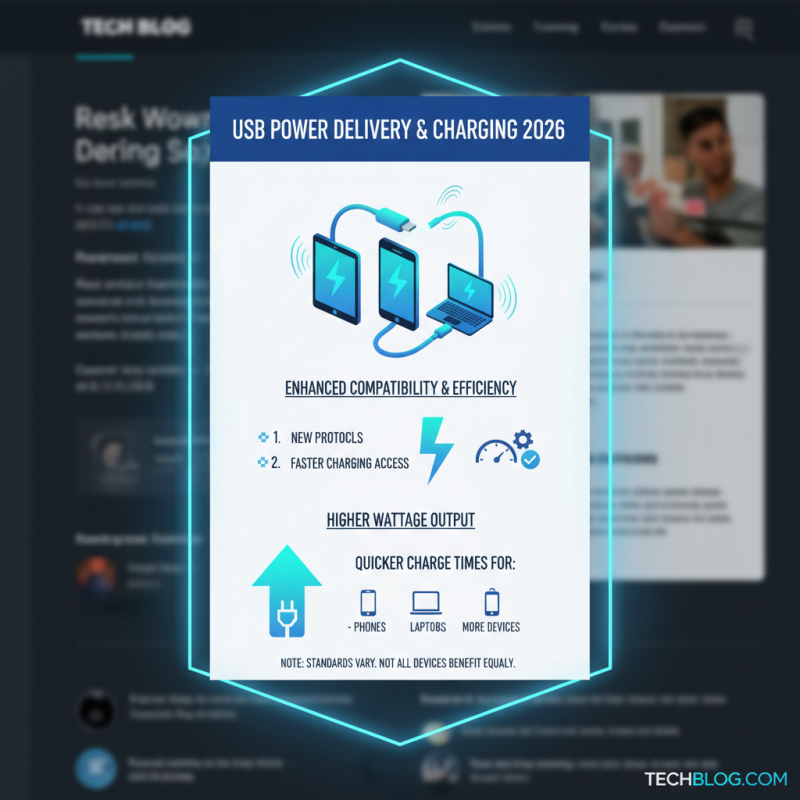
As we look toward 2026, innovations in power delivery and charging solutions are shaping the USB interface landscape. These developments aim to enhance device compatibility and efficiency. New protocols are making faster charging more accessible across a wider range of gadgets. Many devices now support higher wattage output, leading to quicker charging times for everything from smartphones to laptops. It's exciting, but the standards vary. Not all devices will benefit equally.
Meanwhile, the shift to bidirectional power delivery is gaining traction. Devices can both send and receive power, creating a flexible ecosystem. Users can easily power accessories directly from their main devices. However, this can lead to confusion. Users may not know which devices can utilize this feature. The need for clearer guidelines is apparent as we adopt these advancements.
Wireless charging is also evolving, but it’s not perfect. Efficiency remains a concern. There are instances where devices heat up during charging. This raises questions about safety and lifespan. While the convenience of wireless charging is appealing, it’s essential to consider these factors. Balancing speed, safety, and user understanding is vital for the future of power delivery in USB interfaces.
The Role of USB Interfaces in Future Gadget Designs
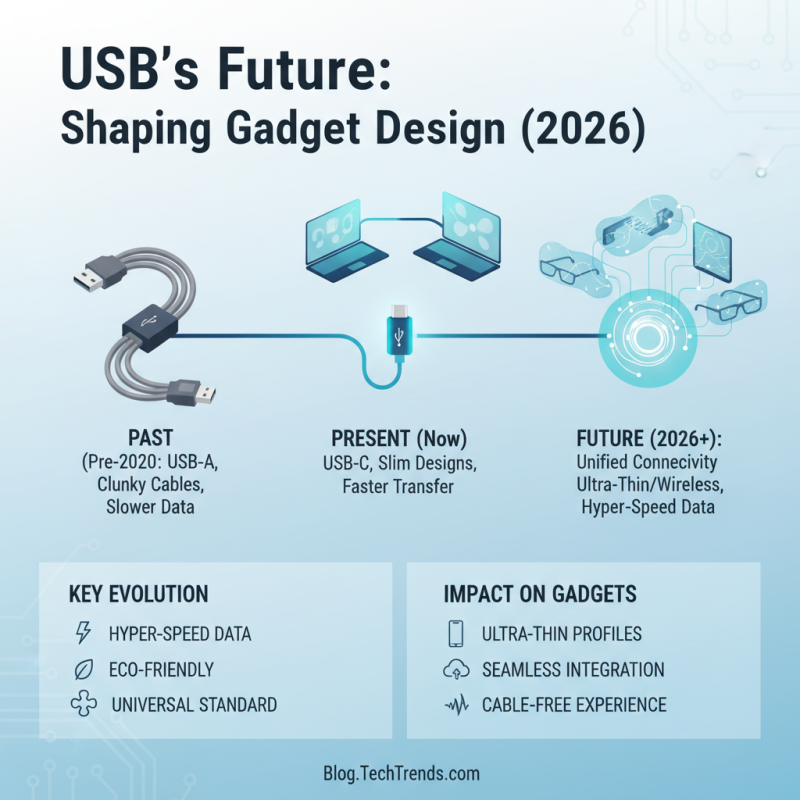
USB interfaces are crucial in shaping future gadget designs. They provide a standardized way to connect devices. In 2026, we expect these connections to evolve significantly. Gadgets will become more streamlined, enabling faster data transfer. The rise of USB-C has paved the way for ultra-thin designs. It reduces the mess of cables, making our tech experience smoother.
However, not all innovations are flawless. Some USB-C ports lack backward compatibility. This can frustrate users who own older devices. Additionally, while speed increases, not all cables support the latest specifications. Many consumers may end up with subpar performance. Future designers must address these shortcomings to optimize user experience.
As gadgets become increasingly interconnected, the role of USB interfaces will expand. They will facilitate charging and data sharing between multiple devices seamlessly. This is promising, but design choices will need careful consideration. Ensuring a balance between advancement and accessibility remains vital. User feedback will be essential in this ongoing evolution. The journey toward perfection is complex.
 008613968780263

 CONTACT NUMBER
 CONTACT