Leave Your Message

Top Shielding Frame Manufacturers for Global Buyers

Choosing a reliable Shielding Frame manufacturer requires more than comparing prices or browsing polished product pages. Global buyers must examine design capability, material quality, testing practices, and delivery performance. A frame may look precise in a catalog, yet fail when panels misalign or conductive seals compress unevenly.

This guide introduces leading Shielding Frame manufacturers serving international markets. It focuses on practical evidence, including engineering experience, production facilities, inspection procedures, and documented electromagnetic shielding performance. Buyers should review drawings, tolerances, surface treatments, gasket specifications, and test reports before approving a supplier. Small details matter. A two-millimeter gap can affect enclosure integrity.

Experienced manufacturers often support custom sizes, aluminum or steel construction, modular assemblies, and integration with cabinets or sensitive equipment. Their teams may provide prototypes, installation guidance, and corrective actions when field conditions differ from original plans. However, stated capabilities require verification. A certification logo alone does not prove consistent production quality.

Supplier evaluation should also include communication speed, packaging standards, export experience, and after-sales support. A frame shipped across continents needs more than protective wrapping. It needs clear labeling, traceable components, and stable documentation. Buyers should compare real project references where possible, while recognizing that confidential clients may limit available evidence.

The manufacturers discussed here are assessed through a buyer-focused lens. Their strengths may differ across customization, volume production, testing depth, or regional service. No single supplier fits every application. Careful review remains essential, especially when shielding performance affects equipment reliability, workplace operations, or long-term maintenance costs.
Top Shielding Frame Manufacturers for Global Buyers

What Shielding Frames Are and Why Global Buyers Need Them

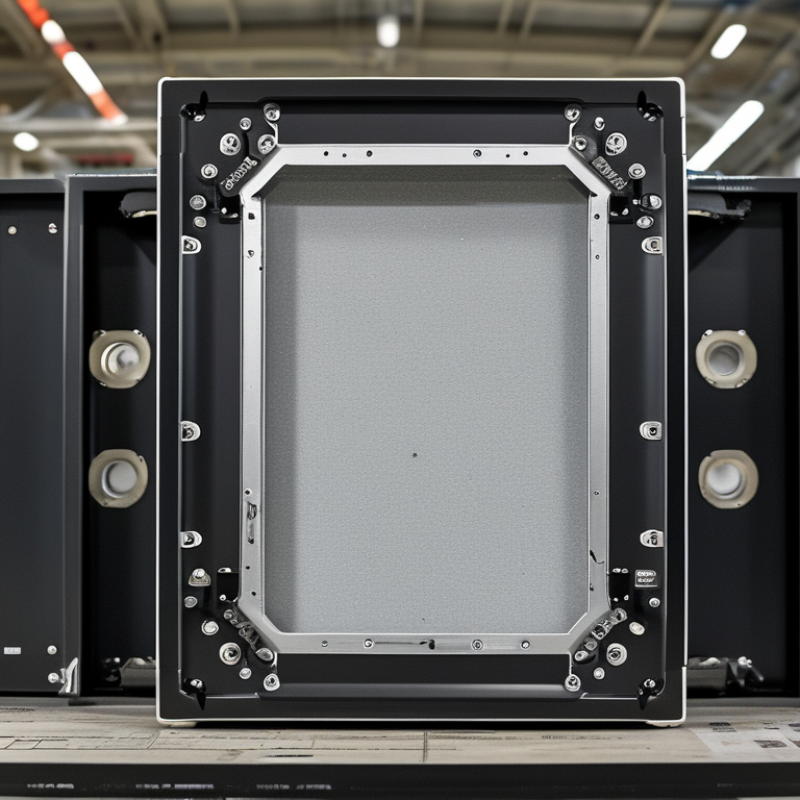
Shielding frames are fitted around openings in electronic enclosures, displays, control panels, and communication equipment. They reduce electromagnetic interference by closing small gaps between a panel and its housing. Some designs use conductive foam, metal mesh, elastomer seals, or plated spring fingers. The right choice depends on frequency range, compression space, surface finish, and environmental exposure.

Global buyers need shielding frames because equipment often crosses regions with different testing expectations and operating conditions. A frame may face vibration in transport, humidity near a coast, or repeated access during maintenance. Even a narrow unsealed corner can weaken protection. Measurements matter. Buyers should confirm aperture length, width, frame thickness, mounting method, and required compression force before requesting quotations. A clear technical drawing prevents expensive revisions.

Reliable manufacturers should provide material data, dimensional inspection records, and electromagnetic performance reports from controlled testing. They should also explain tolerance limits instead of promising perfect results. In practical sourcing, a sample may fit well while a production batch varies slightly. That detail is easy to overlook. Ask how conductivity is maintained after cutting, bending, coating, and assembly. Review traceability, quality procedures, and compliance documents suitable for the destination market. A lower price can seem attractive, yet poor contact pressure may create failures that appear only after installation.

Top Shielding Frame Manufacturers for Global Buyers: What Shielding Frames Are and Why Global Buyers Need Them

Shielding frames are conductive structural components used to support electromagnetic shielding around electronic assemblies. The chart compares theoretical skin depth for commonly used conductive materials. Lower skin depth means electromagnetic currents remain closer to the material surface at higher frequencies.

Reference basis: Values are calculated from the standard skin-depth equation using nominal room-temperature conductivity values and relative permeability of approximately 1: copper 59.6 MS/m, aluminum 35 MS/m, and 304 stainless steel 1.45 MS/m. Actual frame performance also depends on joints, seams, gaskets, apertures, surface finish, and installation quality.

Key Materials, Designs, and Performance Standards

Top Shielding Frame Manufacturers for Global Buyers

Key Materials, Designs, and Performance Standards

Effective shielding frames begin with the right material. Copper offers excellent conductivity and stable contact performance. Aluminum reduces weight and supports corrosion-resistant designs. Stainless steel adds mechanical strength, but its conductivity is lower. Conductive elastomers help seal uneven joints around doors, panels, and removable covers. Material choice should match frequency range, enclosure structure, humidity, and expected service life.

Frame design matters as much as raw material. Overlapping joints reduce leakage paths. Spring fingers support repeated opening and closing. A clean, continuous contact surface prevents gaps caused by paint, dust, or oxidation. Ventilation panels need carefully sized apertures, because larger openings can weaken high-frequency shielding. In practice, a polished datasheet may hide installation problems. I have seen strong materials perform poorly after rushed assembly. Performance should be verified across the intended frequency range, not only at one impressive decibel value. Ask for traceable test reports from competent laboratories, preferably using applicable IEC, IEEE, or equivalent EMC methods.

Tips: Check contact pressure, surface finish, gasket compression, and fastener spacing before approval. Request tolerance data and salt-spray results for harsh environments. Do not compare attenuation figures without confirming test setup and frequency bands. A cheaper frame can become expensive when maintenance access is poor. Also, supplier drawings should show grounding points, joint details, and replacement procedures. These details often reveal more than marketing language.

How to Evaluate Shielding Frame Manufacturers Worldwide

Evaluating shielding frame manufacturers worldwide requires more than comparing unit prices. A reliable supplier should explain material grades, plating options, frame tolerances, and installation limits. Ask for recent inspection records, not only polished catalog images. Small details matter, such as corner alignment, gasket compression, and screw-hole accuracy.

Request a sample before approving volume production. Measure its flatness with a surface gauge and check the finish under direct light. Review test methods, equipment calibration, and acceptance criteria. A manufacturer with practical experience can describe failure patterns, including warped frames, uneven coating, and weak contact points. That conversation often reveals more than a sales presentation.

Traceability should follow every batch. Confirm how raw materials, process changes, and nonconforming parts are recorded. Examine the factory’s quality system, worker training, and response time during technical discussions. Worldwide buyers should also verify export documents, packaging strength, lead-time assumptions, and communication across time zones. Clear evidence builds trust.

Still, no audit is perfect. A strong report can hide inconsistent production between shifts. I would repeat critical measurements on several samples and ask uncomfortable questions. Independent testing may be worthwhile for sensitive applications. Cost remains important, but an inexpensive frame can become expensive after field repairs, redesigns, or delayed installation. Choose manufacturers that welcome verification, admit limitations, and provide evidence that matches their claims.

Leading Manufacturer Categories and Regional Strengths

Top Shielding Frame Manufacturers for Global Buyers

Shielding frame manufacturers usually fall into four practical categories: precision stamping, CNC machining, wire forming, and integrated enclosure suppliers. Stamping specialists suit high-volume orders with repeatable dimensions and lower unit costs. CNC manufacturers handle complex openings, thicker alloys, and short production runs. Wire-forming suppliers work well for spring contacts and lightweight conductive structures. Integrated suppliers can combine frames, gaskets, fasteners, and inspection reports.

Regional strengths differ in useful ways. East Asian production hubs often offer strong tooling capacity, fast scaling, and broad material access. European manufacturers commonly emphasize engineering documentation, controlled processes, and demanding industrial specifications. North American suppliers often support rapid prototyping, smaller batches, and close design communication. South Asian facilities may provide competitive labor costs and growing fabrication capabilities. These patterns help, but they are not guarantees.

A reliable sourcing review should examine more than price. Ask for dimensional inspection records, material certificates, surface-finish details, and electromagnetic shielding test methods. Request samples with the actual alloy, gasket, and plating. A frame that fits on a drawing may fail after bending or coating. Tolerance discussions are often too vague. Define flatness, hole position, contact pressure, and corrosion exposure before production. Factory audits can reveal simple issues, such as mixed lots, weak packaging, or incomplete traceability. Those details feel minor until a shipment reaches an unfamiliar climate.

Top Shielding Frame Manufacturers for Global Buyers - Leading Manufacturer Categories and Regional Strengths

Priority Manufacturer Category Typical Shielding Frame and System Products Common Materials Typical Buyer Applications Regional Manufacturing Strengths Key Purchasing Criteria
1 Precision Sheet-Metal Fabricators
  • Welded or bolted equipment frames
  • Shielded cabinets and enclosure panels
  • Custom access doors and service openings
Galvanized steel, cold-rolled steel, stainless steel, and aluminum Industrial controls, laboratory equipment, power electronics, communications equipment, and test systems North America and Western Europe are strong in engineered, low-volume projects; East Asia is strong in scalable sheet-metal production and integrated assembly. Dimensional tolerance, weld quality, surface treatment, grounding continuity, documentation, and low-volume customization
2 Aluminum Extrusion Frame Manufacturers
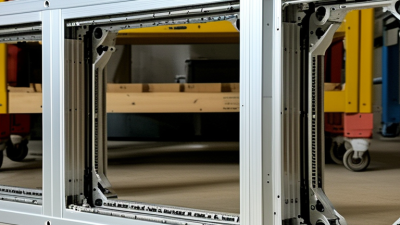
  • Modular extrusion frames
  • Removable shield panels
  • Machine bases and rack structures
6061 or 6063 aluminum alloys, conductive gaskets, plated fasteners, and composite panels Automation equipment, semiconductor tools, electronic test stations, production lines, and research facilities East Asia has extensive extrusion and machining capacity; Europe and North America are strong in modular engineering and automation integration. Profile availability, joint design, conductivity across connections, load capacity, corrosion resistance, and ease of reconfiguration
3 Modular RF Shielding Room Manufacturers
  • Panelized RF shielded rooms
  • Shielded equipment rooms
  • RF doors, filtered penetrations, and ventilation panels
Galvanized steel, zinc-coated steel, aluminum, copper foil, conductive fabric, and elastomeric gaskets EMC testing, wireless device development, medical imaging support areas, defense laboratories, and telecommunications testing North America and Europe have strong testing and regulated-project capabilities; East Asia is strong in electronics-related shielded-room production. Required frequency range, shielding test method, door performance, ventilation design, cable penetration treatment, and site installation support
4 Copper and Beryllium-Copper Mesh Specialists
  • Mesh window panels
  • Ventilation shielding panels
  • Display and instrument apertures
Tinned copper, bare copper, phosphor bronze, and beryllium copper Display systems, ventilation openings, medical electronics, aerospace electronics, and high-frequency test equipment Europe and North America are strong in specialist conductive mesh and regulated applications; East Asia is strong in volume conversion and precision stamping. Mesh aperture, optical transmission, frequency performance, corrosion protection, contact pressure, and compatibility with the enclosure material
5 Conductive Gasket and Contact-System Manufacturers
  • Fingerstock gaskets
  • Wire-mesh elastomer gaskets
  • Conductive fabric-over-foam seals
  • Shielding tapes and grounding contacts
Beryllium copper, stainless steel, nickel-coated fabric, silicone, EPDM, and conductive particles Cabinet doors, removable panels, rack systems, battery enclosures, telecom equipment, and electronic housings North America and Europe are strong in material engineering and qualification; East Asia is strong in high-volume die-cutting and assembly. Compression range, environmental sealing, galvanic compatibility, contact resistance, operating temperature, and replacement availability
6 Cleanroom and Medical Shielding Integrators
  • Shielded imaging-room structures
  • Cleanable shielded partitions
  • Integrated doors, observation windows, and service penetrations
Lead-lined panels where legally permitted, steel, stainless steel, copper, aluminum, and cleanroom-compatible coatings Medical imaging areas, pharmaceutical production, laboratories, semiconductor facilities, and controlled environments Europe and North America are strong in regulated installation and project documentation; East Asia has strong semiconductor and electronics-facility integration capacity. Radiation or RF requirement, hygiene standard, fire rating, room ventilation, structural loading, local approvals, and commissioning records
7 Aerospace and Defense-Grade Enclosure Manufacturers
  • Ruggedized electronics frames
  • Avionics and vehicle equipment enclosures
  • Shock- and vibration-resistant shielded assemblies
Aluminum alloys, stainless steel, titanium for specialized parts, conductive coatings, and plated hardware Avionics, military vehicles, radar support equipment, unmanned systems, and secure communications hardware North America and Europe are strong in qualification-led aerospace and defense programs; selected Asia-Pacific manufacturers are strong in precision machining and electronics assembly. Weight-to-strength ratio, vibration resistance, environmental sealing, traceability, export-control requirements, and qualification testing
8 High-Volume Electronics Enclosure Manufacturers
  • Stamped shielding frames
  • Die-cast and molded housings
  • Internal shields, partitions, and spring contacts
Nickel-plated steel, stainless steel, copper alloys, aluminum die casting, and conductive plastics Consumer electronics, networking devices, automotive electronics, power supplies, and connected industrial products East Asia has strong tooling, stamping, die casting, surface finishing, and electronics supply-chain integration; Central Europe is strong in automotive-oriented production. Tooling cost, cycle time, burr control, coating consistency, automated inspection, packaging, and production scalability
9 Custom EMC Test and Compliance System Integrators
  • Shielded test cells
  • Turnkey EMC laboratories
  • Absorber-lined chambers, filters, antennas, and monitoring systems
Steel panels, galvanized sheet, ferrite materials, RF absorbers, copper or aluminum interfaces, and conductive seals Product compliance laboratories, automotive testing, telecommunications certification, aerospace testing, and research institutions North America, Europe, and Japan have strong compliance engineering and laboratory design capabilities; China and other Asia-Pacific markets provide expanding turnkey capacity. Test standards, usable frequency range, chamber dimensions, site conditions, calibration support, installation schedule, and long-term maintenance
10 Cost-Optimized Contract Fabricators
  • Standardized shielded frames
  • Welded cabinets and brackets
  • Cut-and-bent panels for OEM assembly
Mild steel, galvanized steel, aluminum, copper sheet, and standard conductive hardware Commercial electronics, industrial cabinets, renewable-energy equipment, general machinery, and OEM replacement programs South Asia, Southeast Asia, Eastern Europe, and selected Latin American markets are competitive for labor-intensive fabrication and contract manufacturing. Total landed cost, quality-control procedures, communication, tooling ownership, inspection capability, lead time, and logistics reliability
Regional strengths represent broad manufacturing and engineering tendencies rather than a ranking of individual suppliers. Final selection should be based on the required frequency range, shielding target, mechanical load, environmental conditions, applicable standards, prototype capability, and validated test results.

How to Compare Suppliers, Verify Quality, and Place Orders

When comparing top shielding frame manufacturers, buyers should examine test evidence, not polished catalogs. Grand View Research’s 2024 EMC market report estimated the global market at about US$5 billion in 2023, increasing pressure on suppliers to prove performance. Ask for shielding effectiveness results in decibels, tested across the frequencies your equipment uses. A frame rated at 100 dB at one frequency may perform poorly elsewhere. Check material thickness, gasket compression, corrosion resistance, and enclosure tolerances. Small gaps often become large problems.

Tips: Request an independent test report, sample inspection, and production photographs. Confirm the laboratory’s accreditation and test method. IEC 61000-4-3 can support immunity evaluation, but it does not replace application-specific testing. Compare at least three quotations using the same drawings, tolerances, packaging rules, and delivery terms. Vague specifications make cheap offers look better than they are.

Before placing an order, approve a first article with measurable checkpoints. Verify aperture dimensions with calibrated tools, inspect fastener alignment, and record gasket recovery after repeated opening cycles. ISO 9001 certification may indicate controlled processes, yet certification alone cannot prove shielding performance. Industry reports often show strong market growth, but real factory capability varies widely. I would also review defect records and replacement procedures. This step feels slow. It can prevent an expensive batch mistake. Avoid paying the full amount before inspection, and define acceptance limits in writing.