
 008613968780263



News


0102030405
DC Input Sockets: A Key Component in the Electronics Landscape
2025-08-01
In the ever - evolving world of electronics, DC input sockets play a pivotal role. Also known as DC Power Jacks or DC connectors, these components are fundamental for supplying direct current (DC) power to a vast array of electronic devices.
Dc Input Sockets are designed with a cylindrical or tubular metal pin encircled by a hollow tubular socket that features a center pin. The pin is typically linked to the positive terminal of the power source, while the socket is connected to the negative terminal. This basic structure allows for a straightforward yet effective transfer of DC power.
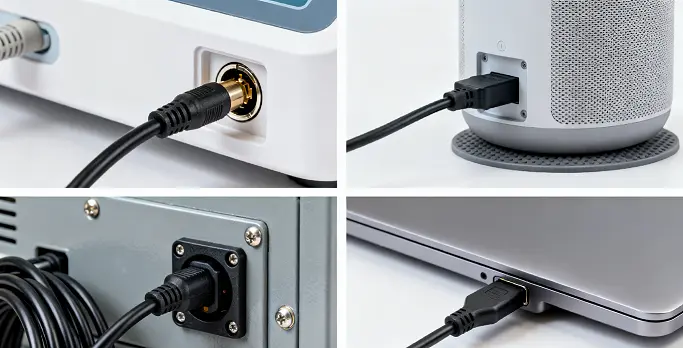
These sockets find applications in diverse electronics scenarios. They are commonly used in power adapters, battery chargers, audio equipment, and computer systems. For instance, when you plug in your laptop's power adapter, the DC input socket on the laptop is what enables the transfer of power from the adapter to the device. In the renewable energy sector, such as solar panels and wind turbines, DC input sockets are used where DC power needs to be initially managed before being converted to AC power for household and commercial use.
There are several types of DC input sockets. The barrel type and the coaxial type are among the most common. Barrel type connectors are prevalent in low - voltage applications, like small audio devices or portable electronics. They come in various sizes, which are specified by dimensions such as inner diameter, outer diameter, and length, all measured in millimeters. Coaxial connectors, on the other hand, are mainly used in communication and networking equipment, such as routers and modems. They are designed to offer a secure connection with minimal interference and are identified by their impedance, commonly 50 ohms or 75 ohms.
The market for DC input sockets is showing significant growth. In China, for example, as of 2024, the DC power socket market had achieved a certain level of sales revenue, and it is projected to grow substantially by 2031, with an expected compound annual growth rate (CAGR) during the 2025 - 2031 period. This growth is driven by the increasing demand for electronic devices across multiple sectors.
In terms of product development, there are continuous advancements. Manufacturers are focusing on improving the performance of DC input sockets. This includes enhancing their ability to handle higher currents. Some models can now support currents ranging from 5A to 30A, depending on the specific type. To achieve this, copper alloy contacts are often gold - plated or silver - plated to reduce impedance, ensuring efficient power transfer.
Another area of development is in providing better protection features. DC input sockets are now being designed with IP67/IP68 rated enclosures in some applications. This high - level of protection makes them resistant to vibration, dust, and water, suitable for use in harsh environments. Additionally, anti - misinsertion designs, such as keyway or polarization structures, are being implemented to prevent incorrect plugging, which could potentially damage the device.
In conclusion, DC input sockets are an essential part of the electronics industry. Their wide - ranging applications, growing market, and continuous technological improvements make them a key area to watch for both manufacturers and consumers in the electronics field. As new electronic devices are developed and existing ones are improved, the demand for high - quality, reliable DC input sockets is only set to increase.