
 008613968780263



News



0102030405
Understanding RJ45: Essential Connector for Networking
2024-01-30
The RJ45 connector, also known as Registered Jack 45, occupies a pivotal role in the intricate web of networking and telecommunications infrastructure. It boasts significance as it empowers the seamless transmission of data, voice, and video signals across diverse devices and networks, providing the essential framework for modern communication. The uniformity of the RJ45 connector as a standard interface for connecting devices using Ethernet cables underscores its critical function in fostering connectivity. Its design, featuring a plug and socket with eight slots and contacts, is instrumental in facilitating the smooth transfer of vital information, acting as the conduit for the exchange of data and communication.
The origin of the acronym RJ can be traced to "Registered Jack," a term emblematic of the uniform physical interface for linking telecommunications equipment. This standardization is integral in ensuring interoperability across a spectrum of networking devices and systems, reflecting the importance of seamless communication within the complex digital ecosystem. Within the context of the Federal Communications Commission (FCC) Standards and Regulations, RJ delineates the interface specifications for public telecommunications networks, asserting its foundational role in upholding the robustness and dependability of communication networks through compliance with established standards.
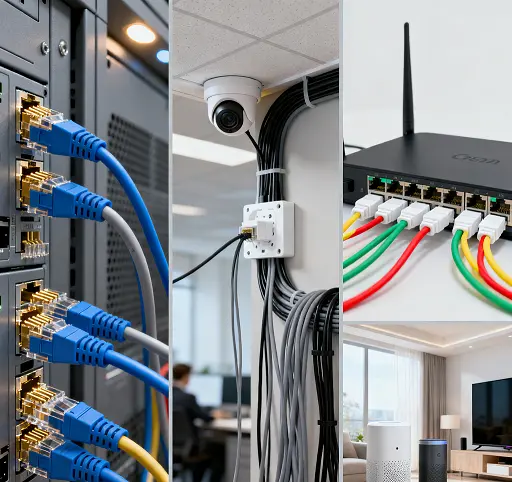
In the realm of computer networking, the ubiquity of the RJ45 connector as the standard interface for Ethernet connections is unequivocal. Its modular design and standardized pin configuration facilitate effortless connectivity between a myriad of network devices, including computers, switches, routers, and other networking equipment, aligning with the growing demand for high-speed data transmission and steadfast network connectivity. The RJ45 connector remains entrenched as a cornerstone of modern networking infrastructure, supporting the seamless transfer of substantial data volumes, thus fortifying its indispensability in the digital age.
Collectively, the widespread integration of the RJ45 connector, its standardized interface, and its fundamental role in enabling network connectivity underscore its profound significance in modern telecommunications and networking. Its impact resonates across diverse industries and applications, serving as a linchpin in the seamless exchange of information and communication within the ever-evolving digital landscape, cementing its position as an irreplaceable component in the intricate tapestry of modern communication and networking practices.