In terms of classification,
Earphone Sockets mainly fall into two categories: the standard 3.5mm interface and the Type-C digital interface. The traditional 3.5mm
Earphone Socket still holds an important position in devices such as audio players and desktop computers, thanks to its wide compatibility. This type of socket adopts a TRS (Tip-Ring-Sleeve) structure, which can transmit left and right channel audio signals simultaneously. Some models with microphone functionality will add an extra Ring to form a TRRS structure, meeting the dual needs of calls and audio playback. Its internal precision metal contacts are gold-plated or silver-plated, which can effectively reduce signal loss and ensure clear and transparent sound quality. Even after long-term use, it can maintain stable connection performance.
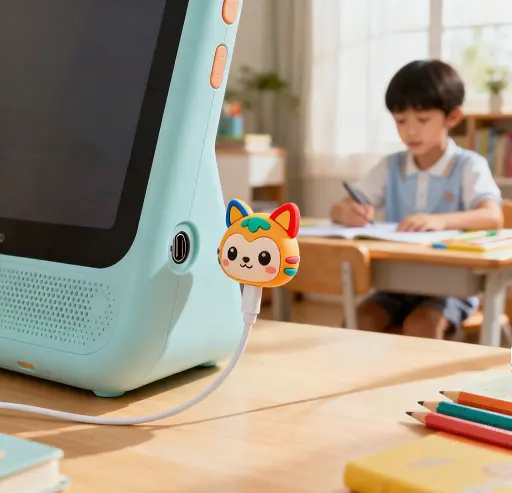
With the trend of digital products becoming lighter and thinner, the Type-C
Earphone Sockethas gradually become the mainstream. It breaks the limitations of traditional analog signal transmission and supports direct transmission of digital audio signals. When paired with a decoding chip, it can achieve high-definition lossless sound quality playback. At the same time, the reverse power supply function of the
Type-C interface can also provide power support for active noise-canceling headphones, allowing the headphones to fully exert their functions. In terms of design, this type of Earphone Socket adopts an anti-misinsertion structure, allowing users to plug and unplug easily without distinguishing between the front and back. It also has excellent waterproof and dustproof performance, making it suitable for complex usage environments—for example, when using a mobile phone to connect headphones during exercise, there is no need to worry about sweat or dust damaging the interface.

In professional fields, the performance requirements for
Earphone Sockets are even more stringent. For instance, monitoring equipment used in recording studios is equipped with Earphone Sockets that need to have extremely low background noise and high signal fidelity, ensuring that audio engineers can accurately capture sound details. Some high-end audio equipment also uses balanced Earphone Sockets, which transmit reverse signals through two signal lines to effectively offset external interference. Even during long-distance transmission, they can maintain the purity of sound quality.
Whether for daily entertainment or professional creation, the
Earphone Socket plays a key role silently. It is not only a physical interface connecting devices and headphones but also the technical core ensuring audio experience. As audio technology continues to develop, the Earphone Socket will also be continuously upgraded to bring users better and more convenient audio connection solutions.
 008613968780263