
 008613968780263


News

0102030405
Innovative Interface Design Becomes a Trend: OEM USB Diagonal Port Drives Device Form Upgrade
2025-07-21
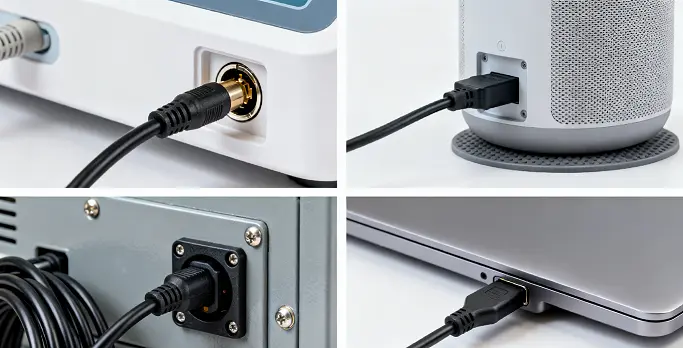
In recent years, as consumer electronics and industrial equipment have increasingly higher requirements for space utilization and user experience, innovative interface design has become a focus of the industry. Among them, the OEM Usb Diagonal Port (Original Equipment Manufacturer customized diagonal USB port) has gradually emerged in fields such as smart home, automotive electronics, and portable devices due to its unique structural advantages.
According to industry research, traditional USB ports mostly adopt vertical or horizontal layouts, which often face space conflict issues in ultra-thin devices or high-density interface scenarios. The diagonal design, with a 45-degree inclined physical structure, can reduce the horizontal space occupied between interfaces by more than 30%. At the same time, it avoids hand blocking during plugging and unplugging, making it particularly suitable for compact environments such as smart watch charging docks and in-vehicle central control panels. An automotive electronics supplier revealed that after adopting the OEM USB Diagonal Port in its new in-vehicle system, the number of interfaces in the central control area increased by 2, while maintaining the overall aesthetics of the panel.
Technically, mainstream OEM USB Diagonal Ports have fully supported the USB 3.2 Gen2 standard, with a data transmission rate of up to 10Gbps, and are compatible with the USB PD 3.0 fast charging protocol. The maximum output power of a single port reaches 100W, meeting the high-speed transmission and fast charging needs of devices such as laptops and drones. It is worth noting that some manufacturers have enabled the diagonal port to have both waterproof (IP67 level) and anti-misinsertion functions through customized contact layouts, reducing the failure rate by 60% compared with traditional interfaces.
Market analysis institutions predict that the global market size of OEM customized Usb Interfaces will exceed 8 billion US dollars in 2025, among which diagonal design products will grow the fastest, with a compound annual growth rate expected to reach 18%. At present, enterprises such as Huawei and Bosch have applied this interface in bulk in their new products, mainly targeting high-end smart home and industrial control fields.
Industry experts point out that the popularization of OEM USB Diagonal Port is not only a structural innovation but also promotes the upgrading of device interaction logic. In the future, with the implementation of the USB4 v2 standard, this type of interface is expected to achieve 80Gbps transmission rate and 240W power supply capacity, further expanding its application space in scenarios such as AR/VR devices and new energy vehicles.