
 008613968780263



News


0102030405
OEM Fiber Lc Sc Connector Exporters: Connecting the World of Fiber Optics
2025-09-01
In the rapidly evolving landscape of modern communication, fiber optic technology has emerged as the backbone for high - speed, reliable data transmission. At the heart of this technology are fiber optic connectors, with the LC (Lucent Connector) and SC (Subscriber Connector) types being particularly prominent. OEM (Original Equipment Manufacturer) fiber LC Sc Connector exporters play a crucial role in ensuring the seamless integration of fiber optic systems across the globe.
The demand for fiber optic connectors, especially LC and SC types, has been on a steep rise. This surge is primarily driven by the exponential growth of data - intensive applications such as cloud computing, 5G networks, and the Internet of Things (IoT). As more and more businesses and households transition to high - speed fiber - based networks, the need for efficient and reliable connectors becomes paramount. For instance, in data centers, where large volumes of data are processed and transmitted constantly, LC connectors are highly favored due to their small form factor and high - density capabilities, allowing for more connections in a limited space.
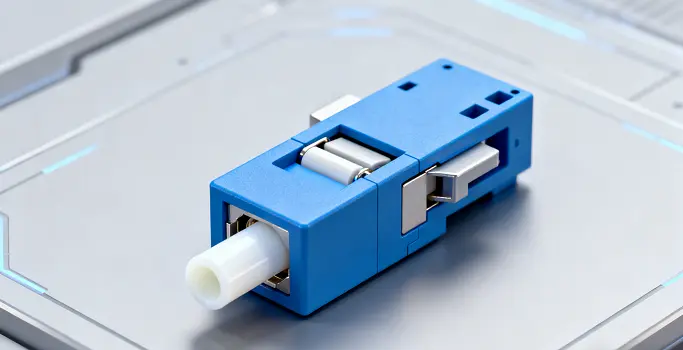
LC connectors are known for their compact design, which is about half the size of the SC connector. This compactness not only saves space in network cabinets and equipment but also enables higher port density in fiber optic patch panels and modules. They are also designed with a push - pull mechanism, providing easy and secure connections. SC connectors, on the other hand, are widely used in various fiber optic applications due to their simplicity and robustness. They have a snap - in connection design, which makes them easy to install and remove, and are suitable for both indoor and outdoor use.
Many manufacturers around the world are involved in the production of OEM fiber LC SC connectors. In Asia, countries like China have become major players in the global market. Chinese manufacturers are known for their ability to produce high - quality connectors at competitive prices. They have well - established manufacturing facilities with advanced production lines that can churn out large volumes of connectors to meet the global demand. For example, companies in Shenzhen and Zhejiang provinces are renowned for their expertise in manufacturing a wide range of fiber optic connectors, including LC and SC types. These manufacturers often offer OEM services, allowing other companies to brand the connectors according to their own requirements.
In terms of product specifications, OEM fiber LC SC connectors typically meet strict international standards. They are designed to have low insertion loss, which ensures minimal signal degradation during transmission. The return loss is also kept high, reducing the amount of light that is reflected back into the source. Additionally, these connectors are built to be durable, withstanding multiple insertions and extractions without significant performance degradation. They can operate in a wide temperature range, making them suitable for use in various environmental conditions.
OEM fiber LC SC connector exporters face several challenges in the global market. One of the key challenges is intense competition. With numerous manufacturers vying for market share, exporters need to constantly innovate and improve their products to stay ahead. This includes investing in research and development to develop new and improved connector designs, as well as improving production processes to reduce costs. Another challenge is ensuring compliance with different international regulations and standards. Different countries and regions may have specific requirements regarding product safety, environmental impact, and performance, and exporters need to ensure that their products meet all these requirements.
Looking to the future, the demand for OEM fiber LC SC connectors is expected to continue growing. As emerging technologies such as artificial intelligence, virtual reality, and autonomous vehicles rely heavily on high - speed data transmission, the need for advanced fiber optic connectivity will only increase. Exporters will need to adapt to these changing demands by further enhancing the performance of their connectors, exploring new materials and manufacturing techniques, and expanding their global reach to tap into new markets.