
 008613968780263



News

0102030405
RJ11 Telephone Interface: The Solid Cornerstone of Traditional Communication
2025-10-05
The name of the RJ11 Telephone Interface originates from its technical standard. "RJ" stands for "Registered Jack," and "11" represents a specific interface specification. In terms of appearance, it usually adopts a 4-pin or 6-pin design. However, in actual telephone communication, only 2 pins are needed to realize basic voice signal transmission. This simple structure endows it with the advantages of low cost and high stability. Compared with the RJ45 interface used for network connection, the Rj11 Telephone Interface is smaller in size and has fewer pins. It is specially optimized for low-frequency voice signals in telephone lines, avoiding unnecessary technical redundancy.
In terms of working principle, the RJ11 Telephone Interface realizes signal transmission by connecting twisted-pair cables. When a user makes a call using a landline phone, the telephone device converts the voice signal into an electrical signal, which is transmitted into the communication line through the RJ11 interface and then delivered to the recipient via the operator's switching network. During this process, the RJ11 interface must ensure the stability of signal transmission and reduce interference and attenuation. Even in remote areas with weak network signals, landline phones relying on the RJ11 Telephone Interface can still maintain clear call quality, serving as an important guarantee for emergency communication. When natural disasters cause mobile network outages, landline phones based on the RJ11 interface are often the only communication tools that can be used normally.
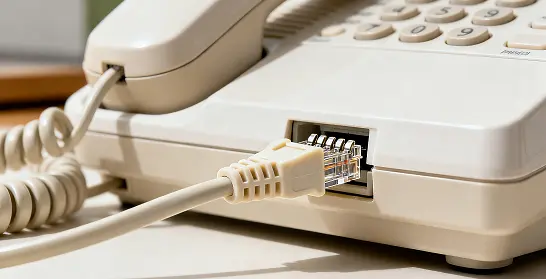
Although mobile phones have become the mainstream communication method nowadays, the RJ11 Telephone Interface has not withdrawn from the historical stage. It is still a reliable choice in scenarios such as enterprise offices, home landlines, and fax machines. Many alarm devices in security systems and old medical equipment also rely on the RJ11 interface for data transmission. Its compatibility and durability make it irreplaceable in specific fields.
From the perspective of technological development, the RJ11 Telephone Interface is an important witness to the transition of communication technology from analog signals to digital signals. Although it does not have a complex functional design, it has occupied a place in the field of communication with its stable and practical characteristics. Even in the future, with the further development of communication technology, the application scenarios of the RJ11 Telephone Interface may gradually decrease. However, its mark in the history of communication and the convenient services it has provided to billions of users around the world are always worthy of being remembered.