
 008613968780263



News


0102030405
Tactile Push Switch: Small but Mighty in the World of Electronics
2025-07-04
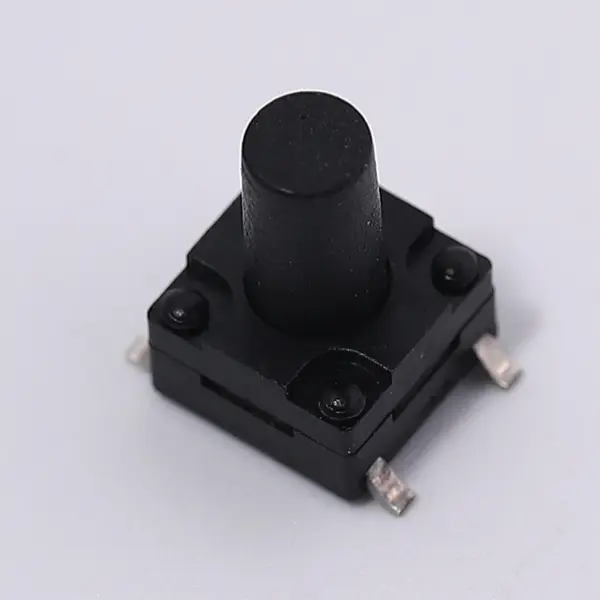
A Tactile Push Switch operates on a straightforward yet ingenious principle. When pressure is applied in the direction of the switch, it closes the circuit, allowing a small current to flow. Once the external force is removed, the switch promptly disconnects, interrupting the current. This on - off functionality is achieved through an internal mechanism that typically involves a metal snap dome. As the button is pressed, the snap dome deforms, bringing the contacts together; upon release, the snap dome returns to its original shape, separating the contacts.
Typically, a Tactile Push Switch consists of several key parts. Pins serve as the connection points to the circuit board, ensuring electrical connectivity. Contacts are responsible for making and breaking the electrical connection. The base provides structural support, while the snap dome, as mentioned, is the heart of the switch's actuation mechanism. Dust covers and covers protect the internal components from environmental factors, and the button is what the user interacts with directly.
The applications of Tactile Push Switches are incredibly diverse. In consumer electronics, they are omnipresent. For instance, in smartphones, they are used for functions like powering on/off, taking screenshots, or activating the voice assistant. In keyboards, each key often contains a tactile switch, providing users with the satisfying "click" feedback that aids in typing accuracy.
In the industrial sector, Tactile Push Switches are used in control panels for machinery. Workers can rely on these switches to start, stop, or adjust equipment operations with precision. In the medical field, they are found in devices such as blood glucose meters and patient monitors, where reliable and easy - to - operate controls are essential.
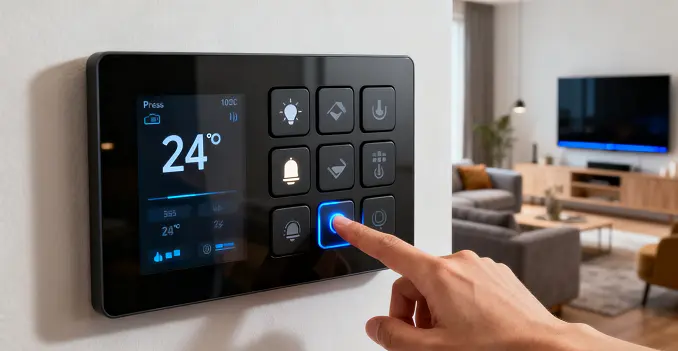
As technology marches forward, Tactile Push Switches are also evolving. Manufacturers are developing smaller and more compact versions to meet the demands of ever - shrinking electronic devices. There is an increasing focus on enhancing durability, with waterproof and dustproof models being developed for harsh environments. Additionally, some advanced tactile switches are being integrated with additional features, such as sensors, to enable more complex interactions and control in smart home systems and the Internet of Things (IoT) devices.
In conclusion, despite their small size, Tactile Push Switches have a profound impact on the functionality and user experience of a wide range of electronic products. Their versatility, reliability, and continuous evolution make them an indispensable part of the modern electronics landscape.