
 008613968780263


News
0102030405
USB Outlet: Reshaping Electricity Use
2025-07-14
Functional Integration and Space Optimization
The core advantage of USB outlets lies in functional integration. Traditional sockets require matching various chargers to supply power to digital devices, while USB outlets have built-in power adapters, eliminating the trouble of carrying and storing additional accessories. Take the common five-hole USB outlet as an example; it is usually equipped with 2-4 Usb Interfaces, which can charge multiple devices such as mobile phones, headphones, and power banks at the same time without occupying traditional socket positions. This design is particularly practical in areas with limited space such as bedroom bedside tables and office desks, as it can reduce cable tangling and keep the desktop tidier.
Intelligent Charging and Safety Assurance
Modern USB outlets generally carry smart chips and have the function of automatically identifying the current required by devices. When connecting different devices, the socket will intelligently adjust the output current (usually 1A-2.4A), avoiding overcharging that damages the battery and prolonging the service life of the devices. Safety performance has also been greatly upgraded. Functions such as overload protection, short-circuit protection, and lightning protection have become standard configurations. Some high-end products also use flame-retardant shells, have passed the 3C certification, and can work stably in humid environments, adding multiple guarantees to household electricity usage.
Scene Adaptation and Design Innovation
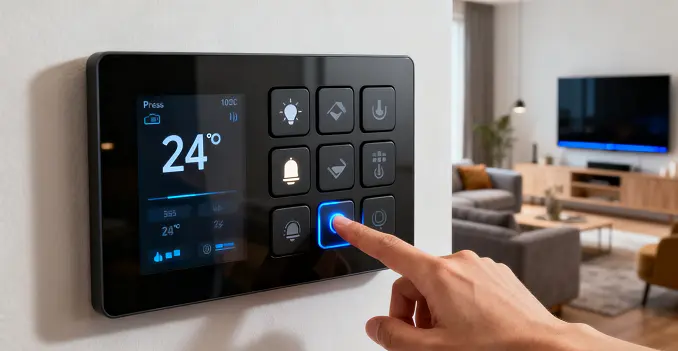
The design of USB outlets fully considers the needs of different scenarios. Special kitchen models adopt waterproof panels, which can safely supply power to small appliances such as food processors; portable travel models are small in size, support multi-country voltage conversion, and are suitable for business trips; new models with USB-C interfaces are compatible with high-power devices such as laptops and switch, with synchronous improvement in transmission speed and charging efficiency. In smart home systems, USB outlets with Wi-Fi functions can also be remotely controlled through mobile phone APPs to realize intelligent management such as timed switching and power statistics.
From homes to offices, from indoor to outdoor, USB outlets, with their convenience and adaptability, have become an important hub connecting digital life. With the development of fast charging technology, USB outlets will further improve charging power and integrate more IoT functions in the future, continuously optimizing people's electricity usage experience.