
 008613968780263




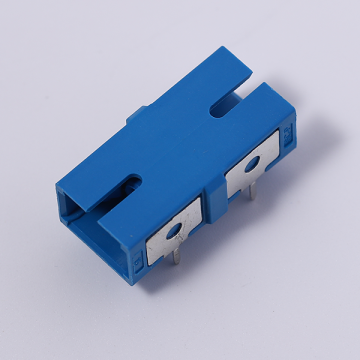
Fiber Optic Adapter
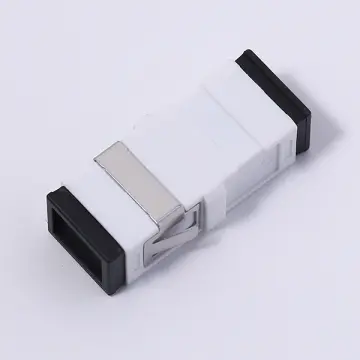
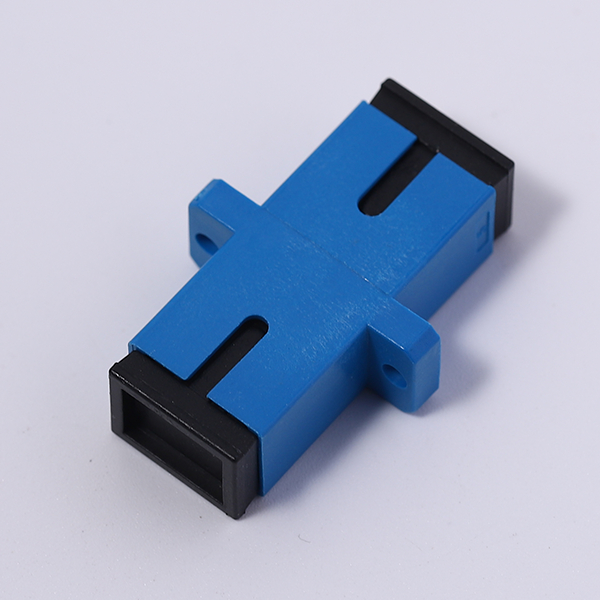

SC-PC-F
01
Fiber optic adapters, also known as flanges, are the core components for achieving precise fiber optic docking in optical communication systems. The main materials have their own advantages: precision ceramics, with their ultra-high hardness and wear resistance, can maintain high-precision pore shapes even under frequent insertion and removal, ensuring long-term stable transmission; Metal materials with high strength characteristics are capable of withstanding harsh industrial environments; Plastic material, with its advantages of lightweight and low cost, is suitable for ordinary scenarios such as civilian use. The internally matched zirconia ceramic insert, with precise aperture control at the micrometer level, minimizes the deviation of fiber concentricity, allowing for efficient transmission of optical signals with almost no loss. The snap on locking device is easy to operate and can be quickly connected within 3 seconds; Nut type fasteners are fastened with threads, ensuring a stable connection even in strong vibration environments such as high-speed rail and aviation.
01
The performance of this product is excellent, with insertion loss as low as 0.3dB or less, and a transmission efficiency improvement of over 30% compared to traditional connectors; The return loss reaches over 40dB, effectively suppressing the reflection of optical signals and reducing system noise interference. After laboratory testing, its plug-in life exceeds 1000 times, and the insertion loss changes by only 0.1dB after each plug-in, ensuring stable long-term performance. It is compatible with 8 mainstream interface types including FC, SC, LC, etc., and supports free switching between single-mode and multi-mode optical fibers. Whether it is 10G, 40G, or 100G networks, it can be easily adapted to achieve flexible conversion of different specifications of fiber connectors.
01
The application layout of fiber optic adapters continues to expand. In telecommunications and data centers, TB level data is transmitted with zero latency per second; In the connection of medical imaging equipment, 128 layer CT images are transmitted in real-time without any lag; Ensure secure transmission of information in complex electromagnetic environments during military encrypted communication. In the smart home scenario, it can achieve millisecond level response of smart devices throughout the house; In intelligent transportation systems, real-time interaction of vehicle road collaborative data is supported; In the construction of 5G base stations and IoT sensor networks, it serves as an "optical link bridge" and has become an indispensable basic component of modern optical communication due to its high stability, strong compatibility, and low loss advantages.